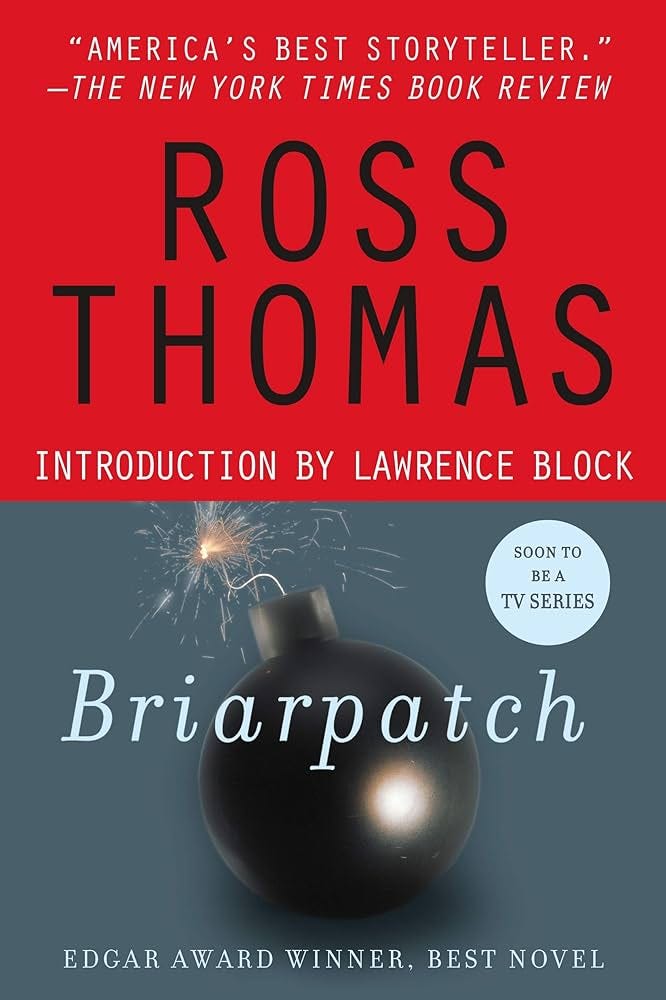
Briarpatch
or be careful when you return to your hometown

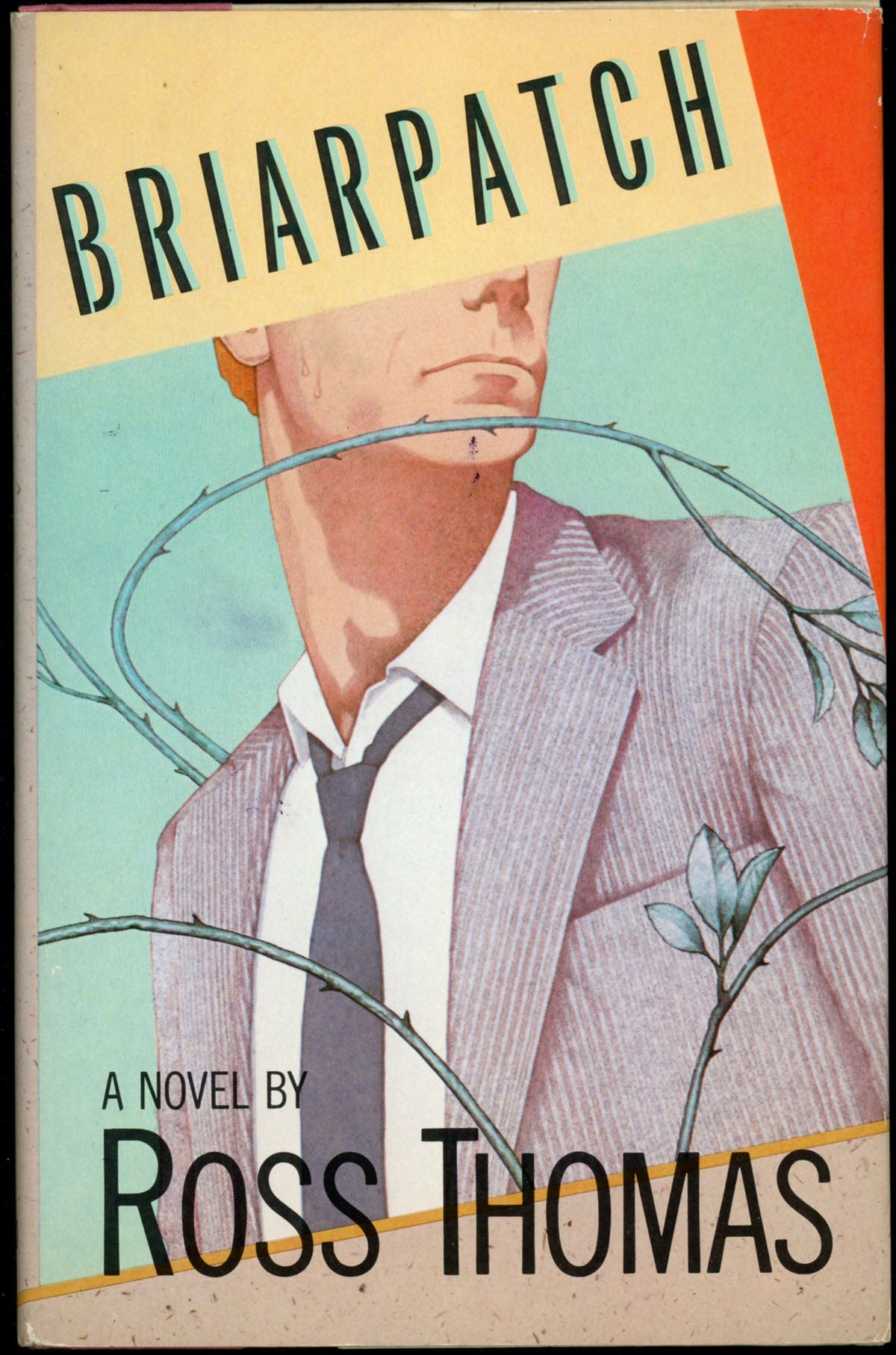
Plot: A man named Benjamin Dill returns to his hometown to investigate the car bombing murder of his sister, Felicity Dill, a homicide detective. As he digs deeper, he uncovers a web of corruption, political intrigue, and a conspiracy that puts his own life in danger.
Written by: Ross Thomas
Published by: St. Martin’s Press
I primarily started this newsletter as a means of exploring the visual mediums associated with noir; however, I couldn’t help but include a noir-tinged novel I read as part of our coverage here. I hope you don’t mind.
Briarpatch is a novel that I became aware of because of the TV adaptation (which I still haven’t seen). I enjoy listening to The Watch podcast co-hosted by Andy Greenwald, who was the showrunner for the TV show. So I picked up the novel years ago and finally got around to reading it.
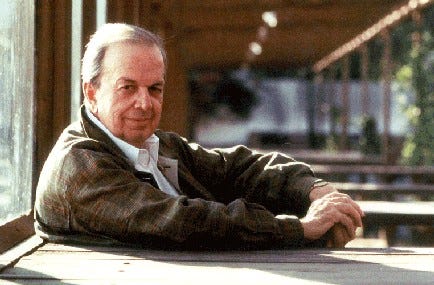
It’s also the one and only novel I’ve read by Ross Thomas, one of the American crime fiction writers who filled the void left by Raymond Chandler. From what I understand, Thomas’ flavor of noir is of the political kind, often shining a light on the underbelly of professional politics in the U.S.. With an election coming up that nobody is looking forward to, I thought now was as good a time as any to talk about the Edgar Award-winning Briarpatch.
Published in 1984, and winning the Edgar Award for Best Novel, Briarpatch follows investigator Ben Dill as he returns to his hometown to unravel the mystery behind his sister's murder. The story kicks off with the explosion of a car bomb that kills his Felicity Dill, a homicide detective. This propels Dill into a labyrinth of corruption, deceit, and danger as he seeks to uncover the truth.
Off the bat, the characters in the novel are clearly residing in the morally gray world of noir. Dill’s investigation is punctuated by encounters with a cast of vividly drawn figures: we have a corrupt sheriff, a senator who uses his position for personal gain, and a former mercenary turned arms dealer who exists at the crossroads of crime and politics. And if they aren’t enough for you, we have real estate schemes involving bribery and corruption. And of course, Dill is a classic noir protagonist: determined and willing to bend the rules to get what he wants.
Dill is a likable guide through the unnamed Southwestern town, which itself is classic noir: seedy motels and weather you can feel as you’re reading. Dill, being the dogged and loving brother that he is, starts looking into Felicity’s unfinished investigations. He discovers that she was probing into a network of corruption involving real estate deals and political bribery. Things become more complex as Dill follows the spiral, but not so much that it becomes convoluted. Thomas carefully lets the reader know what they need to know at a steady pace so we’re not overwhelmed. I like the fact that Ross chose to not name the town. He focuses on the details that really matter: the oppressive heat, rundown locales with busted neon signs, letting the reader know that morals aren’t the only thing decaying in this town. Having Dill return to his hometown and explore it is a fun way to flesh out the more seedy aspects of our setting.
As I mentioned in the beginning, Thomas’ novels often lean political. Briarpatch is exemplary in this regard. Briarpatch paints a bleak picture of political life, where corruption, greed, and moral ambiguity dominate. It’s as if Thomas is saying, “Good luck to anyone trying to seek justice in this system!”
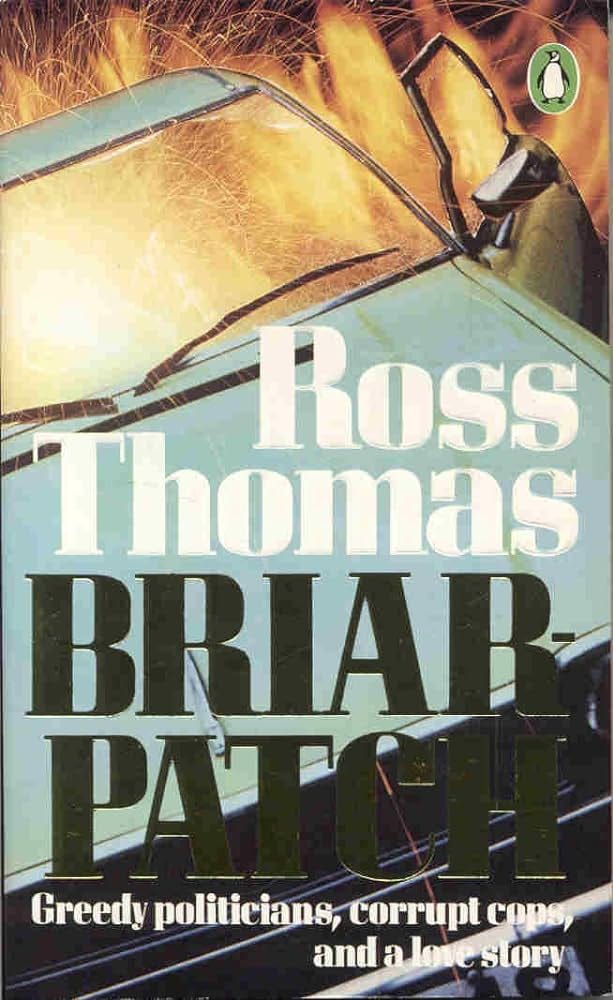
So, if you're like me and haven't yet seen the TV adaptation of Briarpatch but are curious about the source material, give this novel a shot. Ross Thomas crafts a gripping tale that not only keeps you on the edge of your seat but also offers a scathing commentary on the political underbelly of America. With a protagonist you can root for and a setting that’s both vividly bleak and atmospherically rich, Briarpatch is a must-read for any noir enthusiast. Plus, with another election looming, there's no better time to dive into a story that so perfectly captures the corruption and moral ambiguity we can't seem to escape. Trust me, you'll be glad you did.
Thanks for indulging me in my straying from film noir. There’s a good chance there will be more in the future. As much as I’d love to only read noir fiction, I do tend to break it up with other genres. And who knows, maybe we’ll have a review of the TV show sometime.
Favorite line:
Ben Dill: You don't have to forgive. Just understand.
Sweaty foreheads: 😅😅😅😅out of 😅😅😅😅
Femme Fatale: 💃 out of 💃 💃 💃 💃
Links of interest: