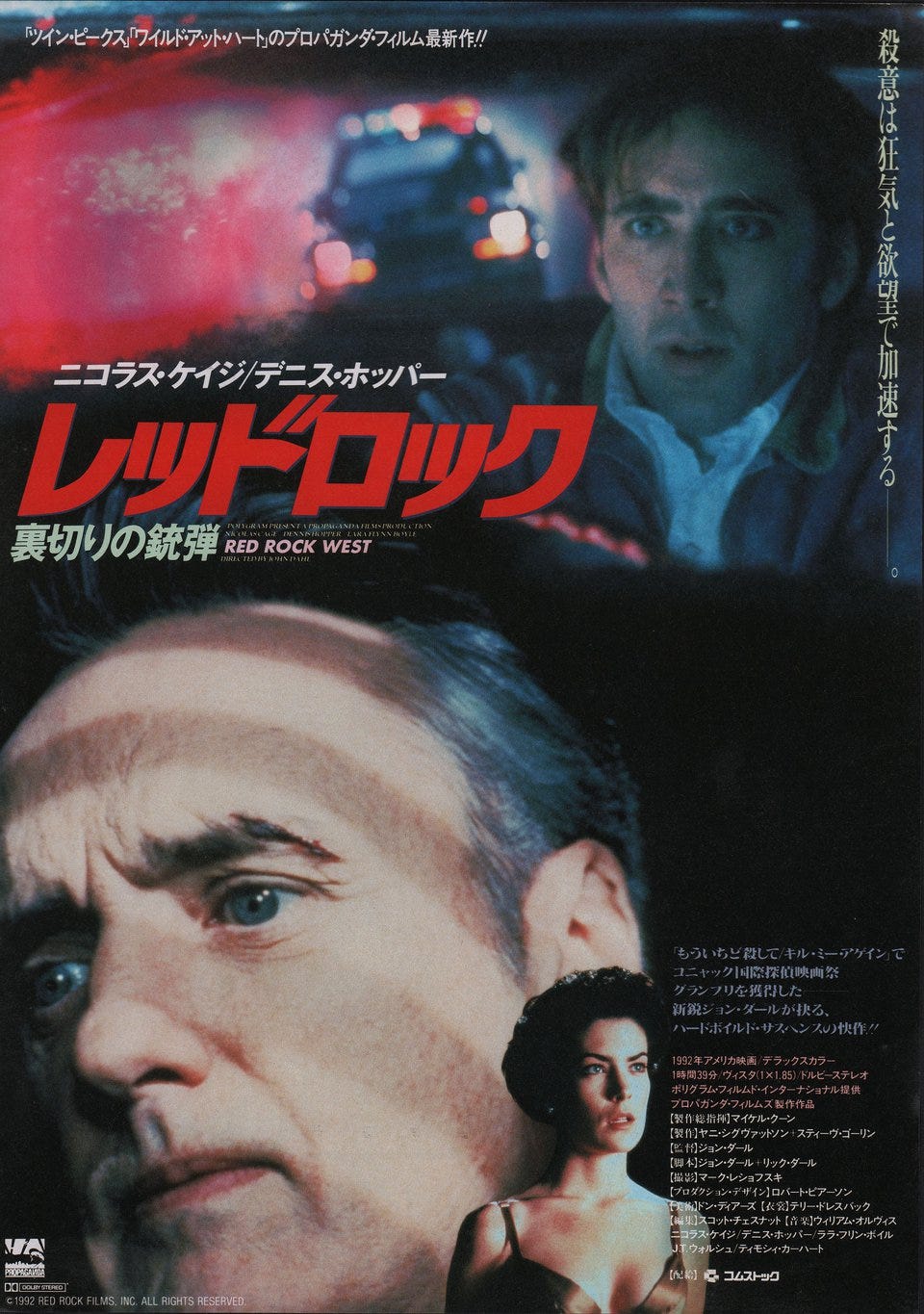
Red Rock West
Or the road to hell is paved with good intentions

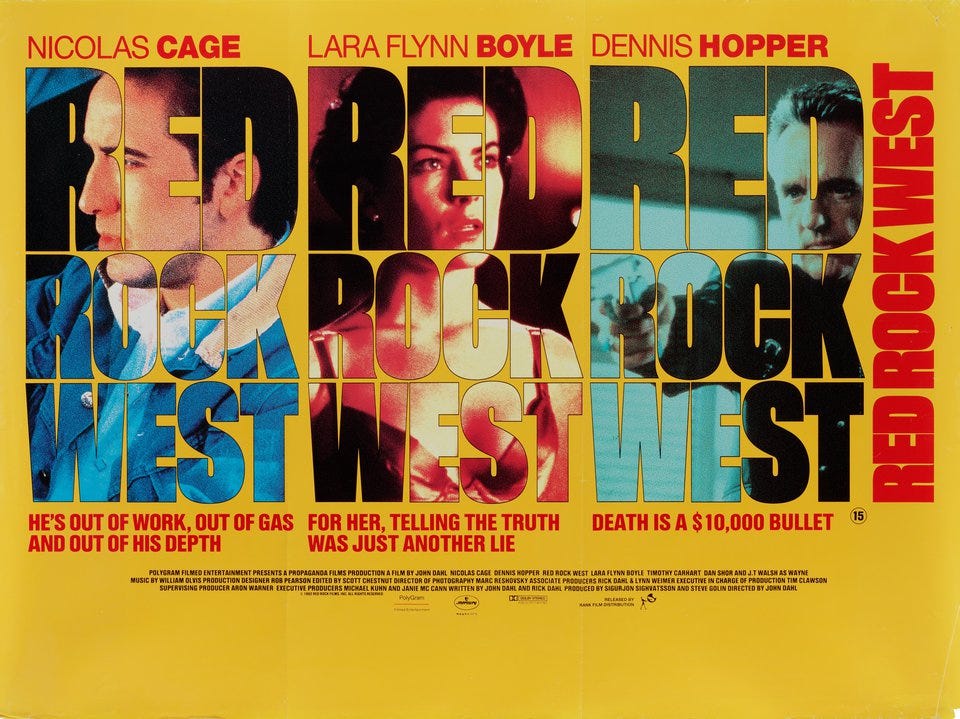
Plot: Upon arriving to a small town, a drifter is mistaken for a hitman, but when the real hitman arrives, complications ensue.
Directed by: John Dahl
Written by: John Dahl and Rick Dahl
Cinematography by: Marc Reshovsky
Studio: Universal
Runtime: 1 hour 38 minutes
I remember the first time I saw Red Rock West. I was taking a course on film history at the University of Utah, and the professor provided a few prompts we could run with for our final paper. One of them was comparing a classic film noir to a newer neo noir. He provided a list of neo noir films that he thought would be good. Among them was The Last Seduction, Body Heat, and a little gem called Red Rock West. I ended up writing about Body Heat, but of course I watched the other movies.
Conveniently, Red Rock West was on Netflix at the time. This was around 2011 or 2012, so streaming was new. Netflix was just buying up the rights to anything. It was the wild west of streaming (no pun intended). I remember watching it and being floored at just how good it was. The elite plot, the stellar cast, the brisk editing, everything. How did more people not know about this movie, I wondered.
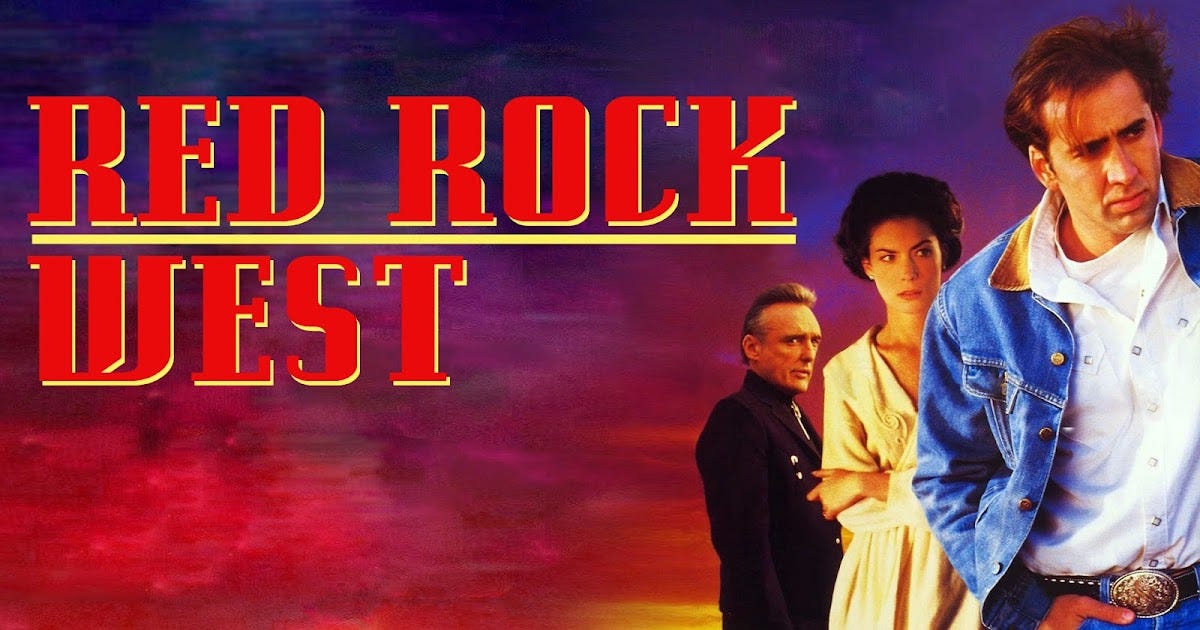
The plot is classic noir: a drifter wanders into town, is mistaken for a contract killer, takes the money anyway, and things get inevitably complicated when the real killer comes into town, wondering where his money is. Drifters. Mistaken identities. Assassination plots. Thrown in some well-placed plot twists and we have one of the better neo noirs ever made.
In January of this year, I had a chance to screen Red Rock West in a theater for friends and family. Initially, I was hesitant to show it. It had been 12 years since my single viewing experience. Was it as good as I remember? Will people like it? Nobody has heard of it.
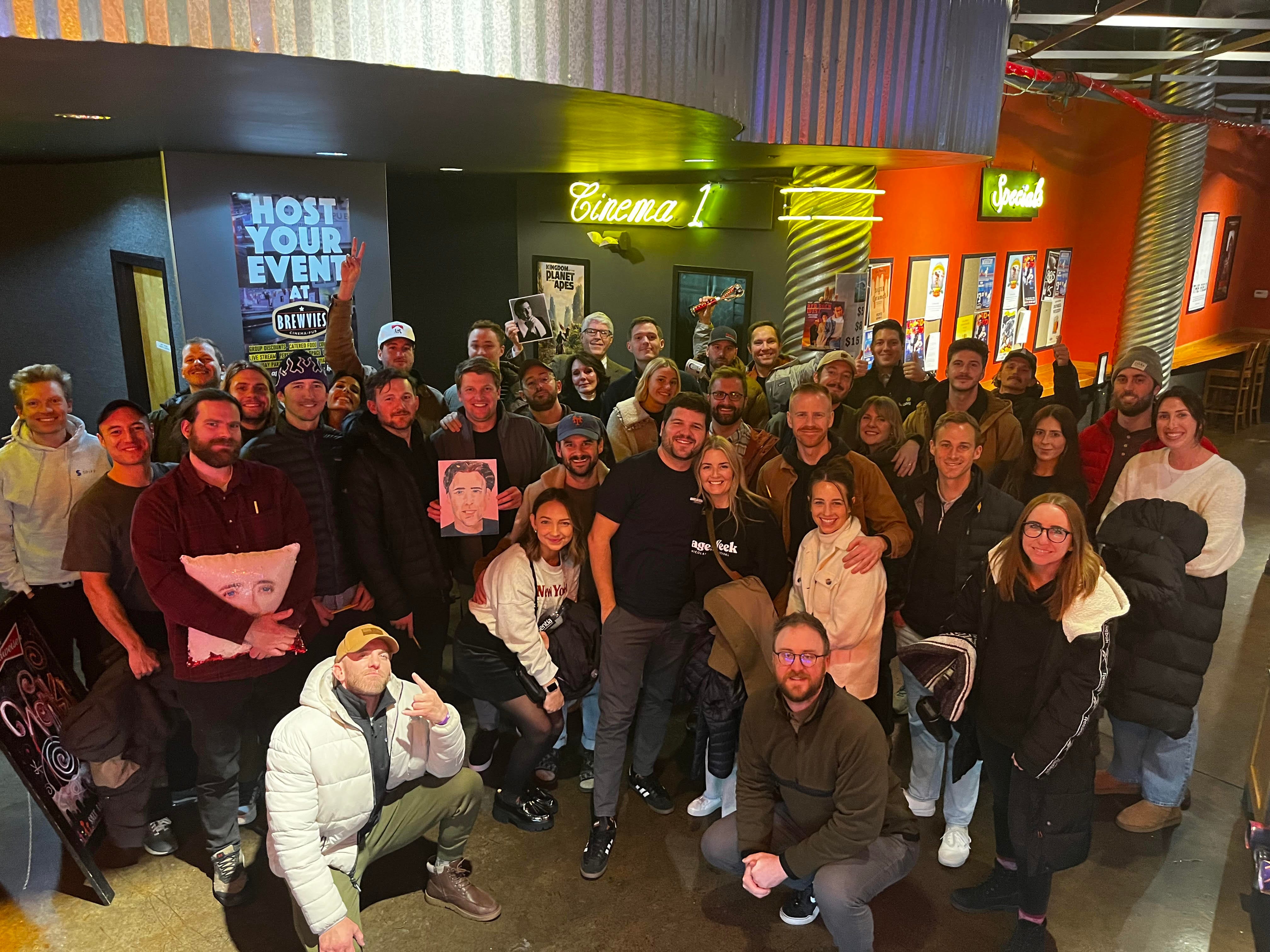
Then it dawned on me…nobody has heard of it! What a unique opportunity (or obligation) I had to highlight a favorite movie of mine and introduce it to a room of first-time viewers. So in the middle of a snow squall in January, I gathered with roughly 60 other people to revisit Red Rock West. And it was a major hit! Everyone I talked to loved it. People were wondering why they hadn’t seen or heard of this movie before.
Red Rock West was directed by John Dahl, and written by him and his brother Rick. It’s Dahl’s second feature film, his first being another neo noir, 1989’s Kill Me Again, which I haven’t seen yet. Red Rock West is in the middle of a neo noir trilogy Dahl wrote and directed: Kill Me Again, Red Rock West, and The Last Seduction. You might not have seen his movies (although, please tell me you’ve at least seen Rounders), but you’ve most likely seen TV episodes he directed. He’s directed episodes of Billions, The Walking Dead, Justified, Dexter, Arrow, and The Vampire Diaries, just to name a few.
Dahl grew up in Billings, Montana. Being a film fan (and a former student of Bill Pullman, who was teaching at Montana State University), Dahl found himself drawn to film noir. Coming from Montana, he wondered what a noir might look like set in a more rural and desolate location. And from that curiosity, we get Red Rock West. The main character being a drifter allows for the setting to be a smaller town. Drifters don’t move to LA or NYC and hang around. I can’t help but wonder if Detour or The Postman Always Rings Twice were an influence on this movie.
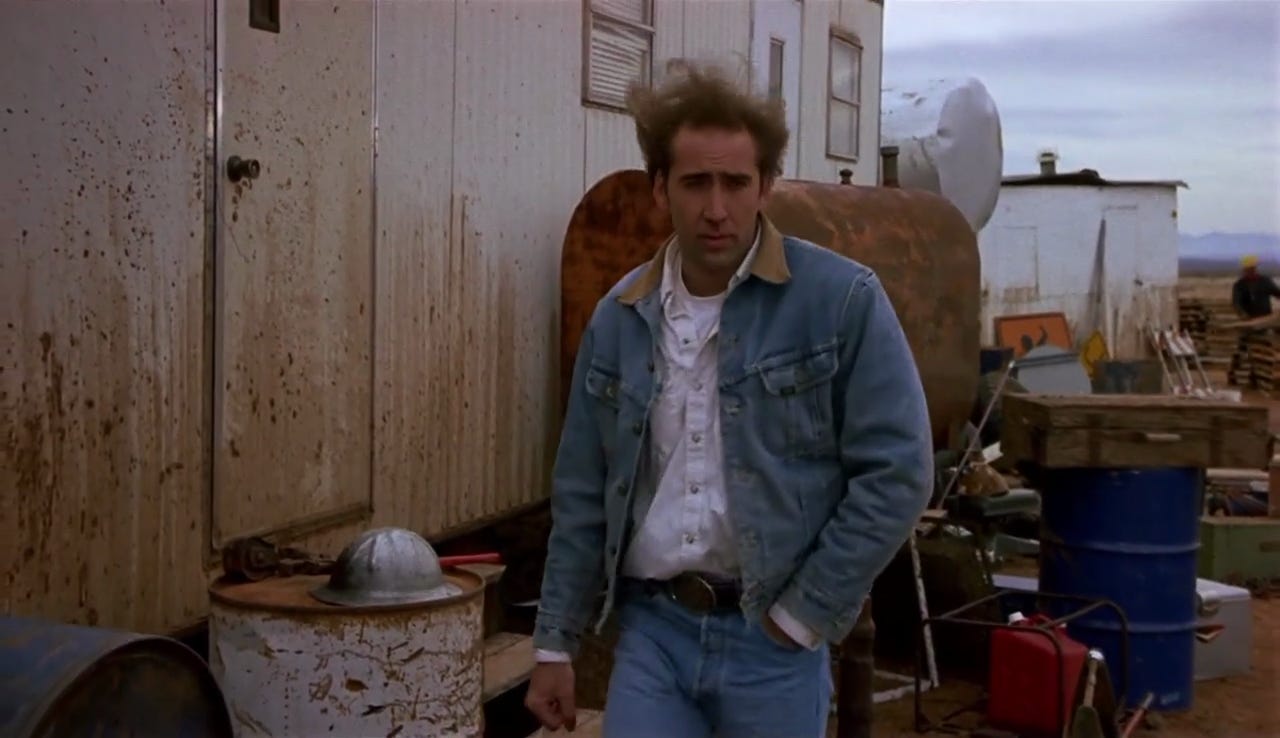
I want to dedicate some words to the drifter character of Michael, played spectacularly by Nicolas Cage. In the opening scene, we see Michael next to his broken down car, doing pushups. We soon learn that he is looking for work. He’s eventually offered a job as a foreman, but he turns it down because he as a leg injury. A buddy of his asks why he didn’t just take it, and Michael says it wouldn’t be right. He would be found out eventually. Michael’s honest nature is evident from the first 5 minutes.
Michael's time in the Marines highlights his disciplined nature. His character is revealed when he resists taking money from an unattended cash register and doesn’t abandon the person he hit with his car in the rain. Instead, he takes the person to the hospital and waits to ensure they are okay, which garners sympathy from the audience. Ironically, these good deeds lead him into trouble, raising the question: Is his natural inclination a character flaw? Let’s see.
If Michael took the job as a foreman, he would never have gone to Wyoming and gotten mixed up with the inhabitants of Red Rock. But since he was honest, he had to go look for work elsewhere. What if he took the money from the register? It may have bought him a few days, just enough time for the real Lyle from Texas to show up, helping him avoid the fiasco in Red Rock. What if he left the guy he hit on the road, or just dropped him off at the hospital? Then he wouldn’ve have discovered who the sherrif is and would have been on his merry way. It’s a cruel twist of irony where the good deeds of someone actually leads them into trouble.
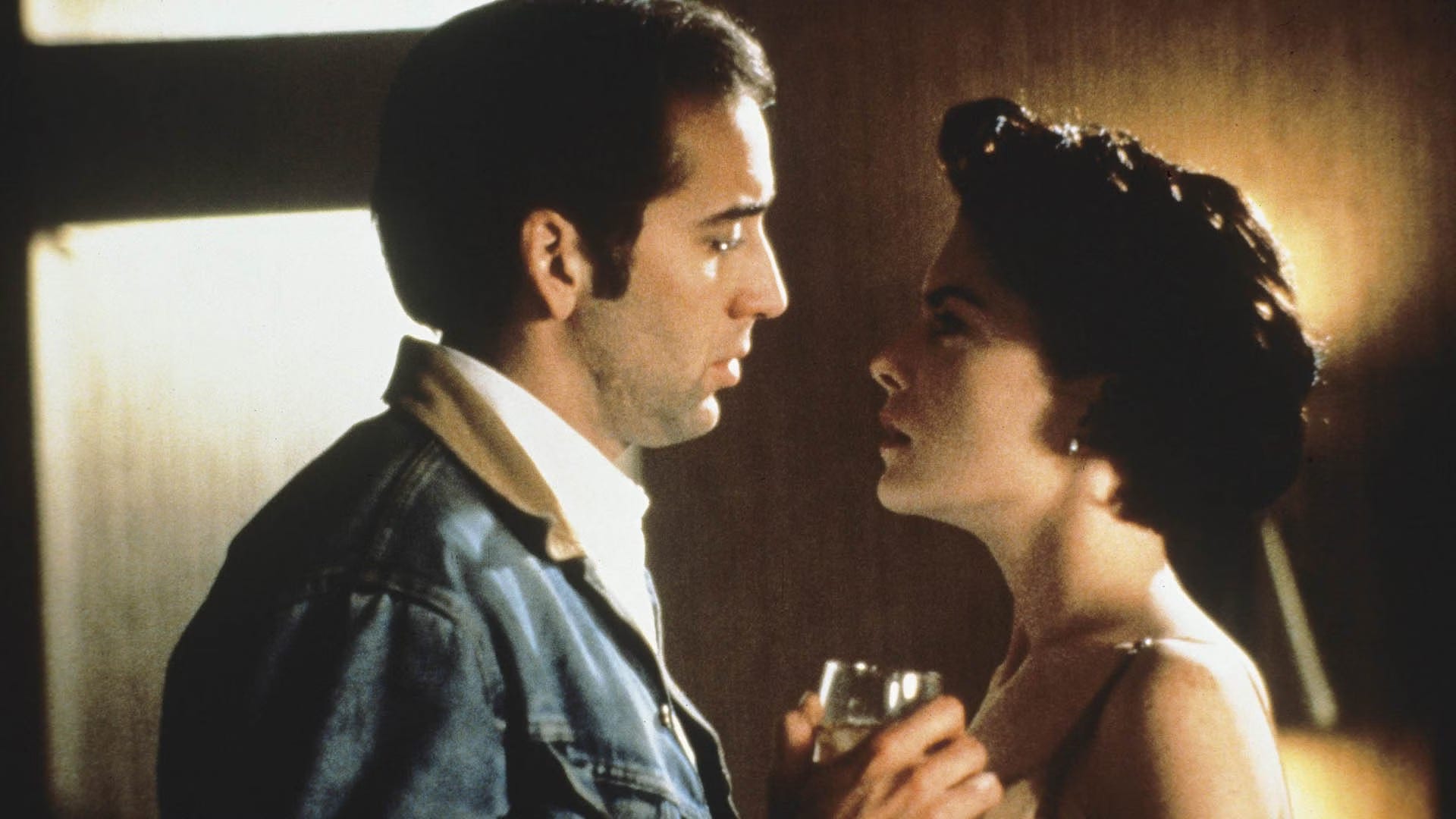
This is one of Cage’s finest performances. He has a great poker face for a lot of the film. He is trying to catch up with the machinations of the evildoers around him. Sure, there are “Cage Rage” moments, but they are earned. I’d freak out if I found out someone I was interested in was wanted by the FBI and I got mixed up with contract killers. Who would be able to keep their cool? Michael’s journey through Red Rock is nothing short of a nightmare, cruelly highlighted by the “Welcome to Red Rock” sign that Michael drives past everytime he returns after thinking he could escape.
Moving on to the rest of the cast, Dennis Hopper is particularly inspired here. Initially, the filmmakers wanted him to play Wayne, the barkeep and sherrif. Hopper didn’t entertain that idea for a second. He was drawn to Lyle and it’s easy to see why. Lyle is a charismatic loose cannon. He looks great in the cowboy assassin gear and has some of the best lines of the movie, always referring to Michael as “cowboy” or “John Wayne.”
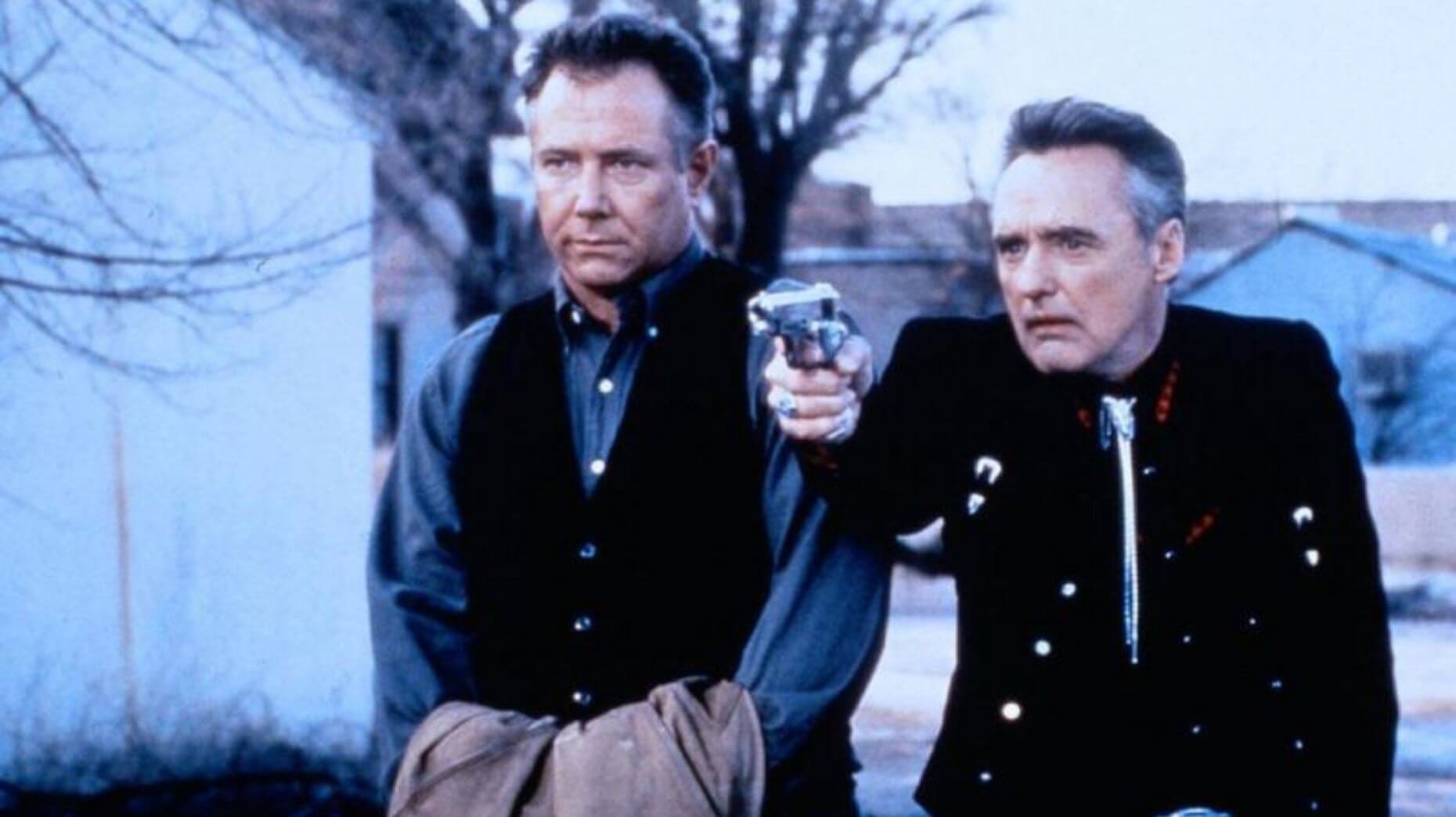
I am happy Hopper took the part of Lyle because J. T. Walsh is perfect casting for Wayne. Wayne is a menace, and one nobody wants to cross. Walsh is one of those character actors we’re always delighted to see on screen—he makes everything he is in better. I was watching the third season of The X-Files just the other day, and Walsh is a prison warden in the episode The List. I mean, talk about perfect casting. Who else could play a vindictive prison warden better? Walsh is an actor that was taken from us too soon, having passed away of a heart attack in 1998. Andrew Johnston of Time Out New York wrote a wonderful tribute to him. I couldn’t have said it better myself:
Walsh is invariably referred to as a character actor who specialized in villains, but that description doesn't quite do justice to what he did. The typical Walsh character was a plot device, really, serving either as a moral counterpoint to the star of the show or as an Iagolike figure egging on the hero in a way likely to lead to the protagonists's downfall. These characters were often self-important authority figures 'defending' the American establishment from the individualism represented by the movies' heroes ... or crooks who thrived by exploiting the hypocrisy of the system. Walsh didn't just make a career of playing bad guys — his performances offered a sort of running commentary on the power structure of American society.
And lastly, Lara Flynn Boyle is subtley electric as Suzanne. She is the catalyst for most of the plot. Some want her dead, some want her to go away, and some just want her. I can’t help but wonder if Dahl knew what he had with this cast. I’m trying not to be hyperbolic here, but everyone nails their part in such a way that I can’t imagine other actors filling in their shoes. Everyone is firing on all cylinders.
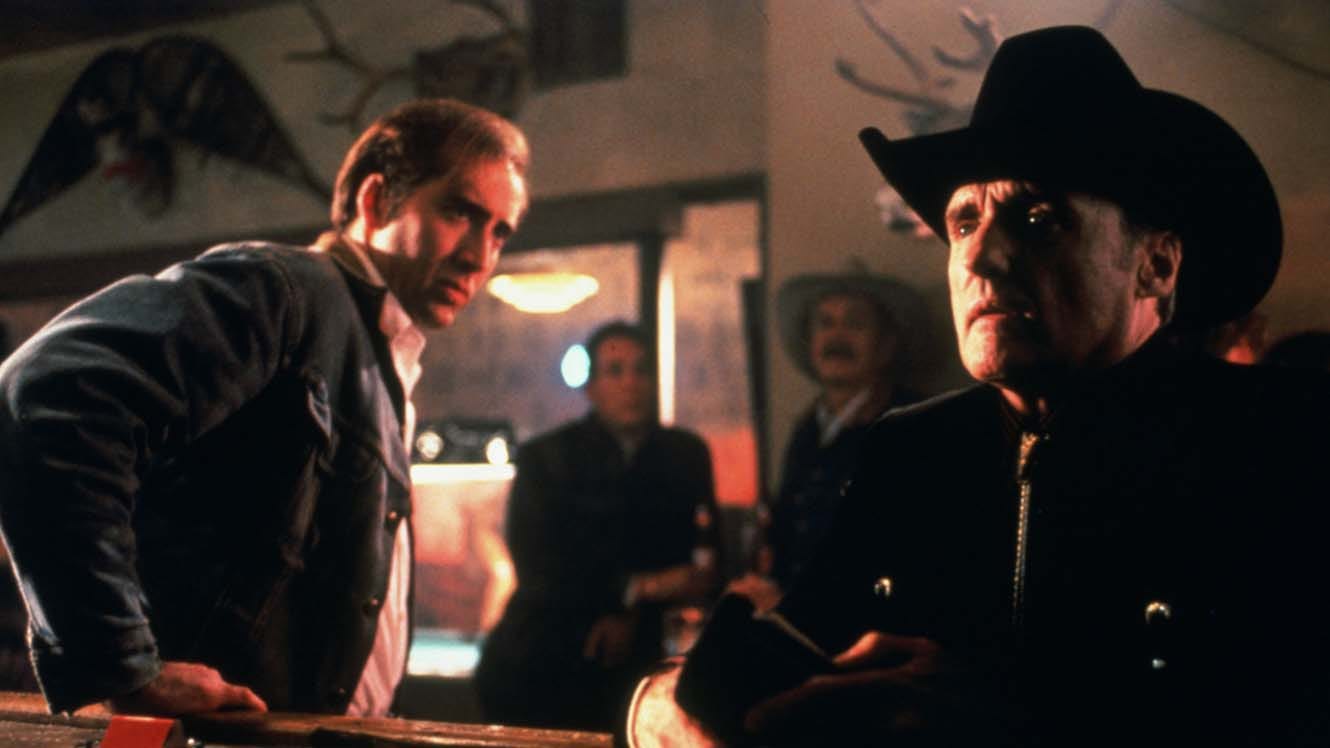
I don’t want to get too into the weeds here, as discovering the plot twists for yourself is half the fun, but know there are nods to both classic noir films and westerns. Perhaps my favorite is how money is buried in a cemetery at the end of the film, a nod to The Good, the Bad, and the Ugly. Red Rock West is a special film that skillfully employs the classic tropes and techniques of noir. You have the honest ex-serviceman, Michael, fresh from the war in Lebanon but still struggling to find his footing in the American dream. There's Suzanne, the alluring femme fatale whose charm conceals her self-serving nature, and Lyle, the dangerous and unpredictable killer.
The film is rich with the usual elements: the deceitful head man, Wayne, a tempting cache of money, shadowy visuals with neon lights and Venetian blinds, and scenes set in liminal spaces like bars, hotels, and vehicle interiors. It captures the essence of noir fatalism, where Michael's one deceptive act in hopes of a few days of bartending spirals into an inescapable vortex of ruin, embracing the genre’s inevitable sense of doom. The writing is really strong. Makes me wish Dahl would write and direct some original films again. If you haven’t seen this one, find a way to watch it. It’s a treasure—one of the best movies you haven’t heard of.
Favorite line:
Michael: I hate to see an innocent woman get hurt…but it’s an awful lot of money
Smoking: 🚬 🚬 out of 🚬 🚬 🚬 🚬
Cowboy hats: 🤠🤠🤠 out of 🤠🤠🤠🤠
Femme Fatale: 💃 💃💃 out of 💃 💃 💃 💃
Trivia:
Nicolas Cage largely took the part due to the recommendation of his uncle, Francis Ford Coppola who is an outspoken fan of John Dahl's first film, Kill Me Again (1989)
Dwight Yoakam brought his own pistol for his role as the Truck Driver. His hit single, A Thousand Miles From Nowhere, is used during the film's closing credits - the version used is a studio demo recording unlike the one from his This Time album.
Test screenings for the film were not strong, with marketing consultant Peter Graves noting it didn't fit neatly into any marketable category. Initially dismissed as unsuitable for festivals, it nevertheless opened successfully in Germany, Paris, and London in the summer of 1993. Piers Handling of the Toronto International Film Festival saw the film in Paris and decided to showcase it at the festival in September 1993, where Bill Banning of Roxie Cinema discovered it and saw its potential for American audiences. Despite already airing on HBO, Banning premiered the film at the Roxie Cinema in January 1994, breaking box office records before expanding to multiple theaters and eventually opening in Los Angeles and New York City.
Links of interest: